
Last updated August 25, 2026
Free on-site gate assessment - hinges, posts, and your LiftMaster or Nice gate operator checked before anything is quoted
The assessment is free and the quote is the invoice.
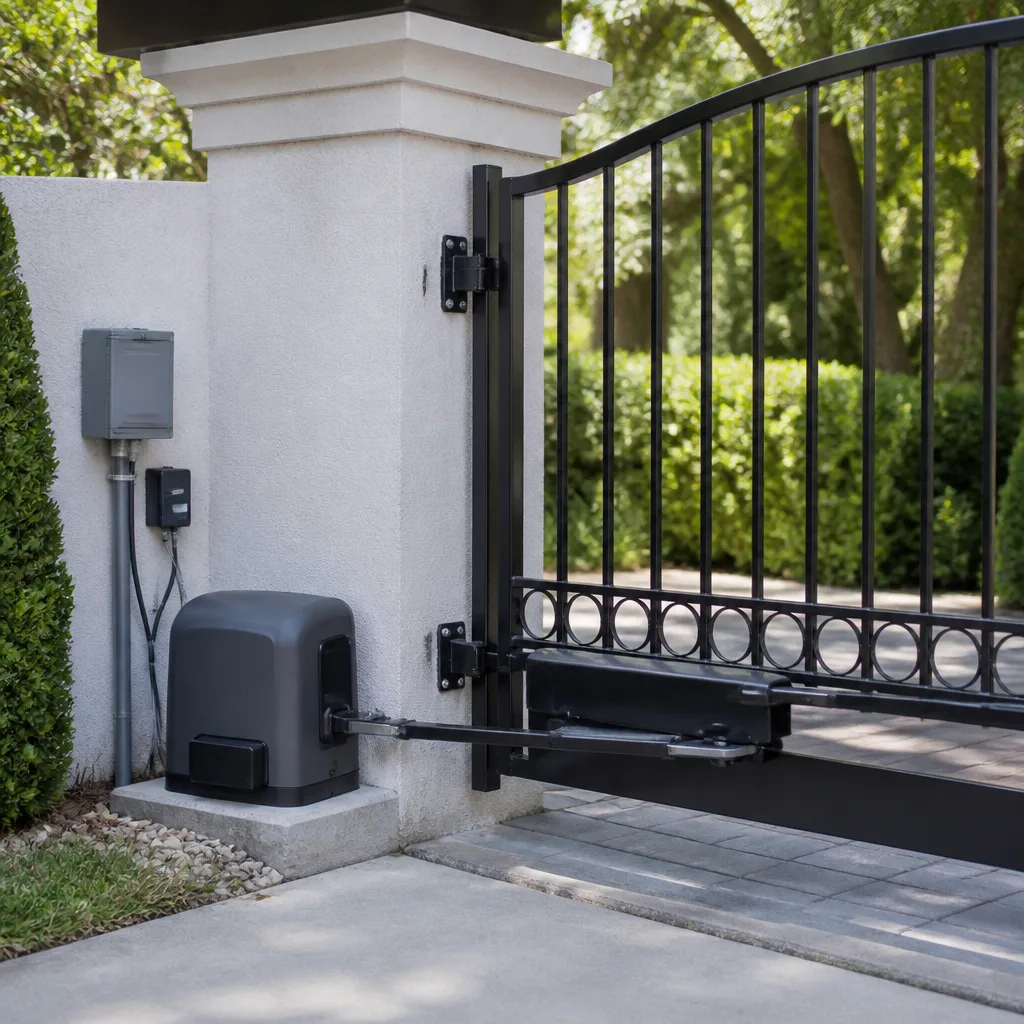
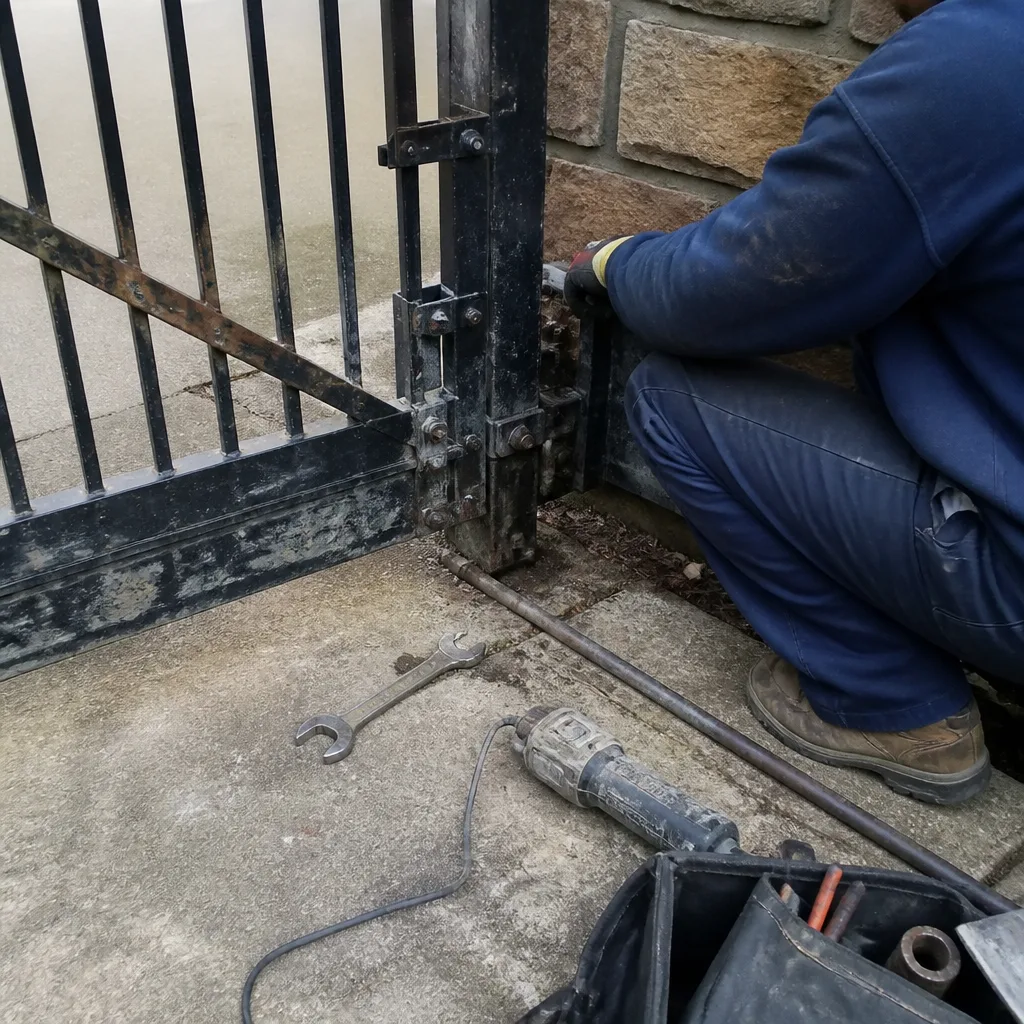 Before
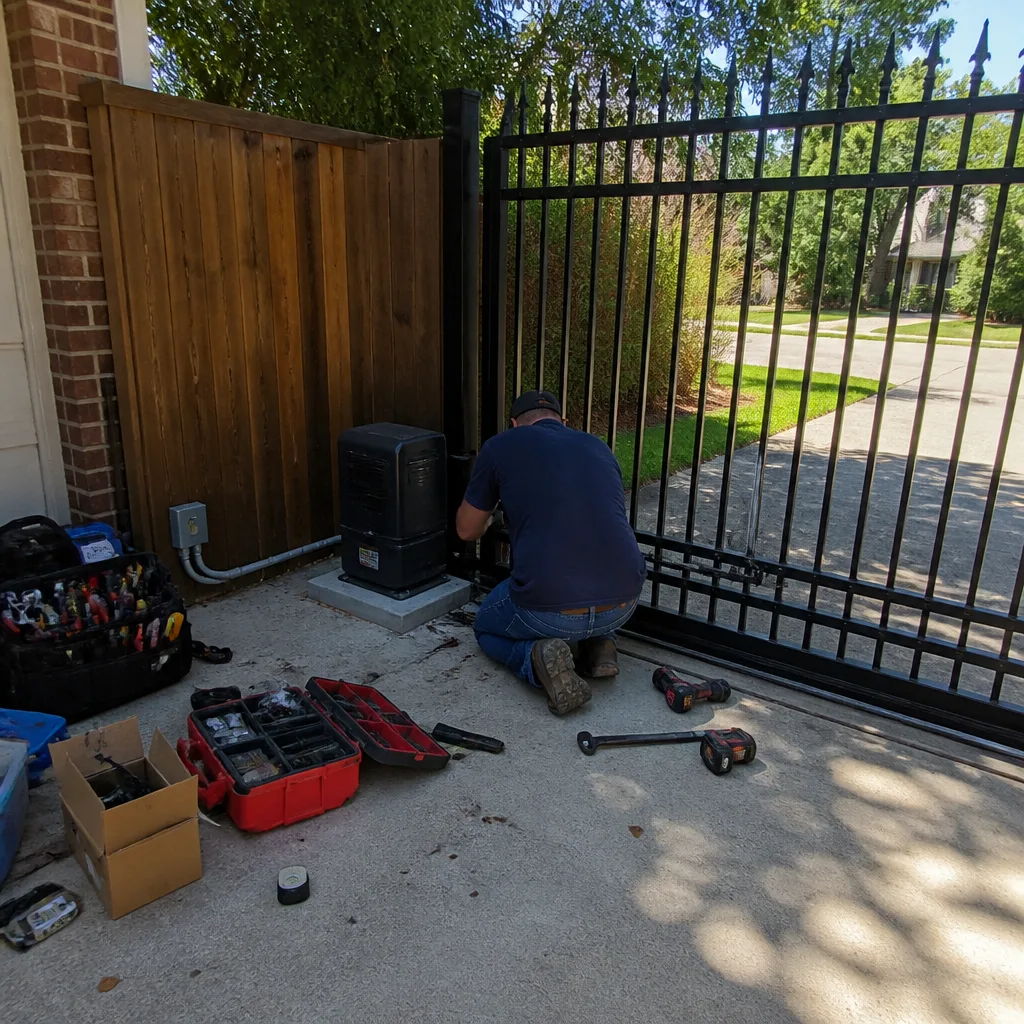 After
After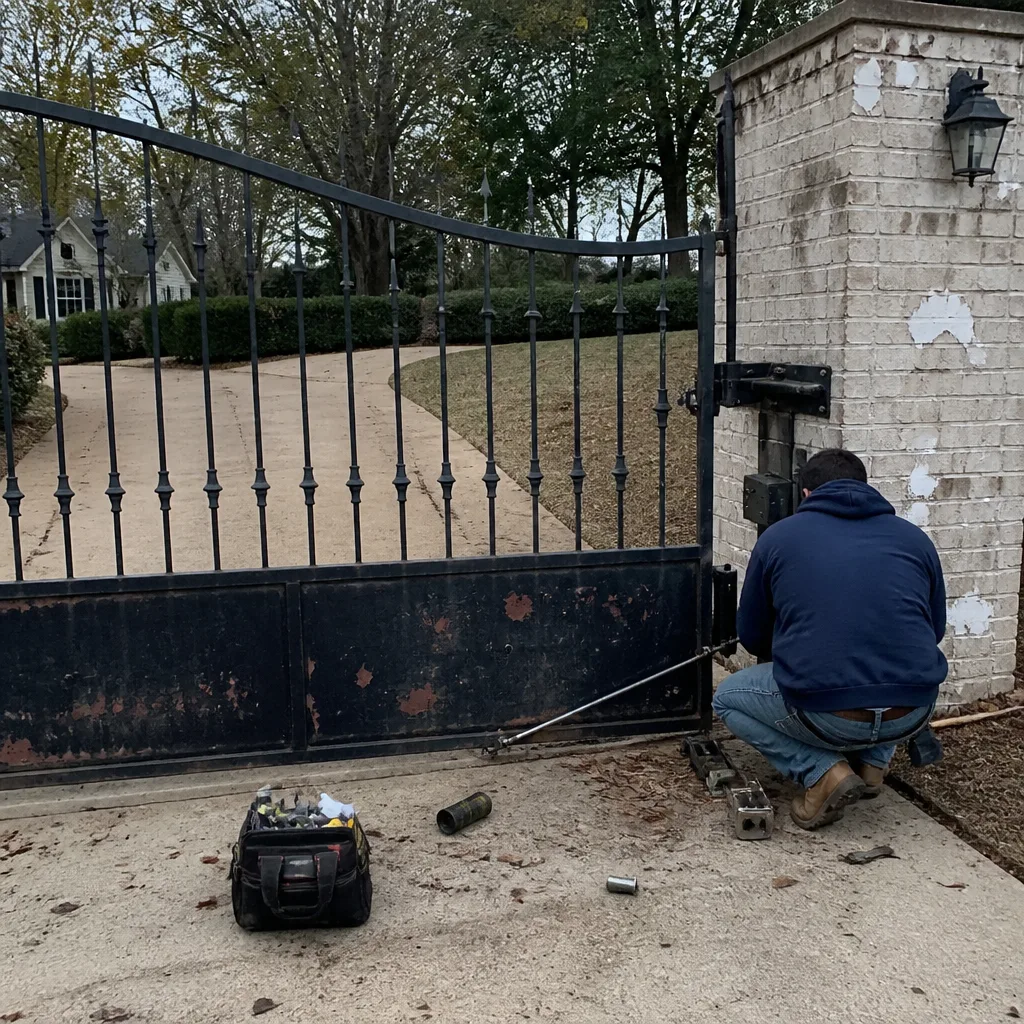 Before
 After
After Before
 After
AfterGate Repair Permits, Codes & Inspections in TX: What You Need to Know
Most homeowners in Texas don’t realize that a driveway gate is legally classified as a fence, not a piece of machinery. That single classification changes everything about how repairs are permitted, inspected, and enforced. It means the city of Grapevine treats your broken gate opener the same way it treats a sagging cedar fence panel, and it means the rules you’ll deal with are buried in a code section most people never read until something goes wrong. This guide walks through what Texas actually requires for gate repair, when you need a permit in Grapevine, which code standards apply to automation and safety, and how to avoid the expensive mistakes we see homeowners make every season.
Quick Answer
Most gate repairs in Texas do not require a permit, but any new gate installation, relocation of a gate, or work that changes a gate’s height, width, or proximity to a public right-of-way typically does. In Grapevine, the key trigger points are the City of Grapevine Code of Ordinances and the 2021 International Residential Code as adopted by the state, both of which treat automated gates as a life-safety concern requiring UL 325-compliant entrapment protection. The short version: repairing a hinge or replacing an opener rarely needs paperwork; moving a gate post or installing a brand-new automatic gate usually does.
Table of Contents
- When Do You Actually Need a Permit in Grapevine?
- Texas Gate Safety Codes: UL 325 and Entrapment Protection
- Setbacks, Easements, and Property Line Rules
- HOA and Neighborhood Restrictions in Grapevine
- The Inspection Process, Step by Step
- What Permits and Inspections Cost in Grapevine
- Repair vs. Installation: Where the Line Is Drawn
- Common Mistakes to Avoid
- When to Call a Professional
- Frequently Asked Questions
- The Bottom Line
When Do You Actually Need a Permit in Grapevine?
The Grapevine Building Inspections Department requires a permit for any “new fence or gate construction” and for any structural modification to an existing fence or gate. Here’s the practical distinction we’ve learned after decades working in this city: a permit is about what changes permanently, not what gets fixed temporarily.
If you are replacing a broken hinge, swapping out a circuit board on a LiftMaster opener, re-welding a cracked weld, or replacing gate wheels that ride the same track, no permit is required. The gate’s footprint, height, and function stay identical. Grapevine treats that as ordinary maintenance, the same category as replacing a light switch or fixing a leaking faucet.
But the moment you move a gate post, extend the gate’s height beyond what’s currently there, add a second leaf where one existed before, or install an automated system on a gate that has never had one, you have crossed into regulated work. The city wants to know about it because those changes can affect drainage, sight lines at the street, and pedestrian safety.
Here are the specific Grapevine triggers, in plain language:
- New gate installation - any gate that did not exist before, regardless of whether it is manual or automated, requires a permit before work begins.
- Gate relocation - moving a gate to a different position on your property line, even by a few feet, requires a permit because it changes the relationship between your driveway and the public right-of-way.
- Height increase - raising a gate above its current height requires approval, since Grapevine’s fence ordinance limits gate and fence heights in front yards and along side streets.
- Width or leaf-count change - adding a second gate leaf or widening the gate opening changes how the gate swings into the driveway apron and triggers a review.
- New automation on a previously manual gate - Grapevine follows the IRC requirement that any automated gate must meet current UL 325 safety standards before it can be operated, and the city wants to inspect that installation.
If you’re unsure where your repair falls, call the Grapevine Building Inspections Department at (432) 237-4128. They’re straightforward with homeowners, and a five-minute conversation can save you a re-inspection fee or a stop-work order later.
Texas Gate Safety Codes: UL 325 and Entrapment Protection
Texas adopts the International Residential Code, and the IRC is unambiguous about automated gates: every automatic gate opener installed on a residential property must comply with UL 325, the national safety standard for gate and door operators. UL 325 is not a suggestion and it is not a manufacturer preference. It is a legally adopted safety standard, written in response to a sobering history of entrapment deaths and injuries on automated gates.
When we install or repair an automated gate in Grapevine, UL 325 governs three things: entrapment protection, force settings, and warning requirements.
Entrapment protection means the gate must have at least two independent means of detecting an obstruction and reversing the gate before it can crush or trap a person, a child, or a pet. For most residential sliding gates, that means a primary entrapment sensor (usually an edge sensor or photo eye) plus a secondary safety device like an additional photo eye or an inherent motor current sensor. A gate with only one safety device is not compliant, no matter how well it works.
Force settings are the maximum amount of closing force the gate may exert before it must stop and reverse. The UL 325 standard specifies maximum force values in pounds, and those settings must be verified with a force gauge after installation. A gate that “seems to close fine” but has excessive force can seriously injure a child. This is not a setting you adjust by feel.
Warning signage and audio requirements apply to gates that serve more than one dwelling or that are installed in multi-family settings. For single-family driveway gates, the primary visual warning is the placement of a UL-compliant warning placard, but manufacturers like FAAC and BFT include specific signage in their install kits that must be mounted and left in place.
A note on brands: we service LiftMaster, FAAC, BFT, Linear, Viking, Ghost Controls, DoorKing, Elite, and Mighty Mule, which means we see the full range of what gets installed in this region. A properly installed FAAC or BFT opener from the factory already includes UL 325-compliant control boards and safety inputs. The risk comes when a homeowner or a handyman installs one of those openers without enabling the safety circuits. The board is capable of compliance, but only if the installer wires the photo eyes and edge sensors correctly and runs the force-setting procedure. We routinely find openers in Grapevine where the safety circuit was never connected because the installer didn’t know it was required. That is a code violation and a genuine hazard.
Setbacks, Easements, and Property Line Rules
Grapevine, like most Texas cities, regulates where a gate may sit in relation to the street, sidewalks, and neighboring property lines. The rules exist to keep sight lines clear at intersections, to prevent gates from swinging over public sidewalks, and to preserve the utility easements that run along nearly every residential lot.
The front setback rule. In most Grapevine residential zones, a driveway gate must be set back a minimum distance from the back of the curb or the edge of the street right-of-way. The exact measurement varies by zoning district, but the common pattern is 20 to 25 feet for a gate that swings inward toward the house. The purpose is practical: a car pulling up to the gate from the street needs enough room to sit fully off the public roadway while the gate opens. If your gate is too close to the street, a car waiting for the gate to open blocks traffic or forces the driver to stop halfway into the intersection.
Side and rear gates. Gates on the side or rear property line generally must sit on or inside your own property line, not on the line itself, and may not swing over a neighbor’s property. Grapevine’s fence ordinance allows property-line fences by mutual agreement, but gates are treated as swinging structures, and that swing arc matters. A gate that opens onto a neighbor’s sidewalk or across a shared driveway easement will be flagged.
Utility easements. Almost every lot in Grapevine has a utility easement along the front, rear, or side property lines. You cannot pour a concrete gate foundation or set gate posts inside a recorded utility easement without approval from the utility that holds the easement, and most utilities will not grant that approval for a permanent structure. Before you set a single post, check your survey or your closing documents for the phrase “utility easement.” If your planned gate location overlaps it, move the gate or call the utility company to discuss options.
In our experience, the most common setback problem in Grapevine is a homeowner replacing a manual gate with an automatic opener and discovering the gate sits too close to the street for a car to wait safely while the gate cycles. The old manual gate required the driver to get out and push it open, so the car approached slowly and parked close to the gate. An automatic gate needs a longer approach so the car can stop, the gate opens, and the car proceeds. If your existing gate sits eight feet from the curb, automation may not be feasible without relocating the gate. That triggers a permit and possibly a variance.
HOA and Neighborhood Restrictions in Grapevine
Grapevine has a high concentration of deed-restricted neighborhoods and homeowners associations, particularly in the established communities east of Main Street and in the newer developments near Grapevine Lake. If you live in an HOA-governed neighborhood, your HOA’s architectural control committee rules apply to your gate whether or not the city requires a permit. These are two separate approvals, and city approval does not override your HOA.
Most Grapevine HOAs restrict gate height, material, color, and placement in front yards. The typical restriction is a maximum height of 6 feet for a driveway gate panel, with a requirement that the gate match or complement the home’s exterior and the neighborhood’s existing fence style. Some HOAs restrict automated gates entirely in front yards; others permit them only if the opener is screened from view from the street.
The practical sequence we recommend to every Grapevine homeowner:
- Pull your HOA’s CC&Rs and find the section on fences, walls, and gates. Read it yourself; don’t rely on a neighbor’s summary.
- Submit an architectural request to the HOA before you buy any materials. Include the gate dimensions, proposed materials, color, opener brand if automation is planned, and a simple site sketch showing where the gate will sit.
- Wait for written HOA approval.
- Apply for a city permit from the Grapevine Building Inspections Department, using the HOA approval as supporting documentation if requested.
- Complete the work and schedule the required city inspection.
It is tempting to skip step one and hope nobody notices. We have seen that end poorly more times than we can count, including one homeowner in Grapevine who installed a beautiful custom iron gate, then received a letter from the HOA requiring its removal within 30 days at his own expense. The gate was code-compliant with the city, but the HOA’s rules were stricter than the city’s, and the HOA had the legal right to enforce them. Do the reading first.
The Inspection Process, Step by Step
If your gate project requires a permit in Grapevine, here is the path it follows, from first call to final approval. This is the same process we walk our customers through, and it has not changed much in the years we have been working in this city.
- Permit application. You or your contractor submits an application to the Grapevine Building Inspections Department, either online through the city’s permitting portal or in person at City Hall. The application includes a site plan showing the gate location, the gate dimensions and materials, and if automation is included, the opener model and safety device list.
- Plan review. A plan reviewer checks the application against the city’s fence and gate ordinance and the applicable residential building code. For most driveway gates, this review is quick, often one to three business days. If there is a setback question or an easement conflict, the reviewer may request a survey or additional documentation.
- Permit issuance. The permit is issued, and a copy must be posted on the job site while work is underway. We tape ours to the nearest fence post in a clear plastic sleeve. The city wants to see it when the inspector arrives.
- Work begins. Gate posts are set, the gate is hung, and if automation is part of the scope, the opener, photo eyes, edge sensors, and control box are installed and wired.
- Inspection request. When work is complete, a final inspection is scheduled. In Grapevine, inspections are typically scheduled for a specific day with a window of time, not a specific hour.
- Final inspection. The inspector checks gate height and placement against the permit, verifies that setback requirements are met, confirms that safety devices are installed and functional if the gate is automated, and signs off if everything is correct.
- Correction or approval. If the inspector finds a problem, you receive a correction list and a re-inspection date. If everything passes, the permit is closed and the job is done.
One thing worth knowing: Grapevine does not typically require a separate electrical inspection for a residential gate opener if the opener is a low-voltage plug-in unit. But if you are running a dedicated circuit to the gate for a high-cycle commercial-style operator, an electrical permit and inspection may be required as part of the scope. Your permit application will clarify that.
What Permits and Inspections Cost in Grapevine
Permit fees in Grapevine are modest compared to the cost of the gate itself, but they are not zero, and it helps to know the range before you budget.
| Item | Typical Cost in Grapevine |
|---|---|
| Fence/gate permit (residential) | $50 to $150, depending on project valuation |
| Plan review fee | Often included in the permit fee for simple projects |
| Re-inspection fee (if you fail the first inspection) | $75 to $150 per visit |
| Survey (if required) | $350 to $800 for a residential lot |
| HOA architectural review filing fee (if your HOA charges) | $0 to $100 |
The permit fee is based on the valuation of the work, which for a typical driveway gate replacement falls in the low end of that range. The expensive surprises are not the permits themselves. They are the costs that come from skipping a permit: a re-inspection fee when a neighbor calls code enforcement, a stop-work order that leaves your driveway unusable, or in the worst case, a requirement to remove and redo non-compliant work. Compared to those outcomes, a $75 permit is cheap insurance.
Repair vs. Installation: Where the Line Is Drawn
The most common question we hear in Grapevine is some version of “I’m just fixing my gate, so I don’t need a permit, right?” The answer is usually yes, but the line between repair and installation is drawn in a specific place, and it is worth understanding exactly where.
Repairs that do not require a permit:
- Replacing a broken hinge or gate wheel with an equivalent part
- Re-welding a cracked weld or reinforcing a sagging gate frame
- Replacing an opener control board, capacitor, or limit switch
- Replacing a damaged gate panel with one of the same height and width
- Servicing an opener: replacing a battery, adjusting force settings, aligning photo eyes
- Replacing a keypad, radio receiver, or loop detector on an existing automation system
Work that is treated as new installation and requires a permit:
- Setting new gate posts in a new location
- Installing a gate where no gate previously existed
- Changing gate height, width, or the number of leaves
- Adding automation to a manual gate for the first time
- Replacing a manual gate with an automatic gate of different dimensions
- Running new electrical service or a dedicated circuit to a gate location
The distinction is rooted in what changes permanently. A repair restores the gate to its original condition or keeps it functioning as before. An installation changes the gate’s physical footprint or its method of operation. When in doubt, call the city and describe the work. The building department would much rather answer your question before work starts than deal with a compliance problem after the fact.
Common Mistakes to Avoid
- Skipping the HOA review because the city doesn’t require a permit. In Grapevine, your HOA’s architectural rules are a separate approval track. A permit-free repair is irrelevant if your HOA restricts gate changes. We’ve watched homeowners remove brand-new gates they paid for because they skipped the HOA step.
- Automating a gate that sits too close to the street. A car needs room to wait off the roadway while an automatic gate opens. If your gate sits eight feet from the curb, an opener creates a traffic hazard. The gate may need to move back, which triggers a permit and possibly a setback variance.
- Installing a gate opener without enabling the safety circuits. A Facebook Marketplace opener or a handyman install often leaves the photo eyes disconnected because the installer didn’t know they were required. A gate without UL 325 entrapment protection is both a code violation and a genuine danger, particularly to small children and pets.
- Neglecting the utility easement check. Gate posts and concrete foundations placed in a recorded utility easement can be ordered removed by the utility company. Check your survey before you dig or pour.
- Ignoring gate swing direction. Grapevine code and most HOAs prohibit a gate from swinging over a public sidewalk or a neighbor’s property. A gate that looks right from the street can still be a violation if its swing arc crosses the property line.
- Failing a final inspection and not understanding why. The two most common Grapevine inspection failures are an automated gate with no entrapment protection and a gate that exceeds the approved height. Both are avoidable with a careful install and a pre-inspection walkthrough.
- Filing a permit as “fence” when the project is a gate. Some Grapevine permit applications group fences and gates under the same category, but the review requirements differ if the gate is automated. Clearly identify the work as a gate, and state whether automation is included.
When to Call a Professional
If your gate project involves any of the following, call a professional before you buy materials or start the permit application: a new automatic gate, automation on a gate that has never had it, relocation of an existing gate, a gate near a street or intersection with possible setback issues, or any repair where a high-tension spring, a heavy gate panel, or an automated operator with force settings is involved. These are not casual weekend projects. A gate panel weighs far more than it looks, and an operator with misconfigured force settings can injure someone.
We handle the full scope in Grapevine, from permit application support to final inspection, including certified service on LiftMaster, FAAC, BFT, Linear, Viking, Ghost Controls, DoorKing, Elite, and Mighty Mule openers. Ironworks Gate Co. offers free estimates in Grapevine - call (432) 237-4128 and we’ll walk you through what your project needs before you spend a dollar.
Frequently Asked Questions
No, not for ordinary repairs that restore the gate to its original condition, such as replacing a hinge, a wheel, a control board, or an opener part. A permit becomes necessary only when the gate’s footprint changes, its height or width changes, or automation is added to a previously manual gate. When in doubt, call the Grapevine Building Inspections Department and describe the work. For an exact quote on any repair, call (432) 237-4128 - estimates are free.
A residential gate permit in Grapevine typically runs between $50 and $150, depending on the stated project value, and plan review is usually included for simple projects. Re-inspection fees, if the first inspection fails, run $75 to $150 per visit. A survey, if required, can add $350 to $800. For a full written quote on a gate project in Grapevine, call (432) 237-4128.
You can, but if the gate was previously manual, the automation itself triggers a permit in Grapevine, and the city will require a final inspection. That inspection will verify UL 325 entrapment protection, and if your opener’s photo eyes or edge sensors are not connected, you will not pass. Most opener brands, including FAAC, BFT, and Linear, are capable of full compliance, but only if installed correctly. If you’d rather not manage that yourself, our team handles the full scope - call (432) 237-4128 for a free estimate.
Most residential zones in Grapevine allow a maximum front-yard gate height of 6 feet, with side and rear yard gates potentially higher depending on the zoning district and your HOA rules. Your HOA may restrict height more tightly than the city does. Before you buy materials, check both the city ordinance and your HOA’s CC&Rs. We can help you navigate both - call (432) 237-4128.
No. Repairs that do not change the gate’s appearance, height, or operation generally fall outside HOA architectural review in most Grapevine communities. The HOA review triggers on new construction, material changes, color changes, height changes, and the addition of automation. Read your CC&Rs to see where the line is drawn for your neighborhood.
Read the correction list carefully, fix each item, and schedule a re-inspection. The two most common failures we see in Grapevine are missing entrapment protection on an automated gate and a gate that exceeds the approved height. Both are correctable, but the re-inspection fee is yours to pay, so it is cheaper to get it right the first time. For help with a correction list or a re-inspection, call (432) 237-4128.
The Bottom Line
Gate repair in Texas and in Grapevine specifically is rarely complicated from a permitting standpoint, and most repairs can be done the same week with no paperwork at all. But the line between repair and installation is where problems live, and the safety rules around gate automation are not optional. UL 325 entrapment protection is the law, Grapevine enforces it, and the risk of a non-compliant gate is a child pinned against a driveway fence. Do the work right: check your HOA, check your setback, check your easements, and if automation is involved, make sure the safety devices are actually connected and tested. If you want help from a company that does this work every day, Ironworks Gate Co. home is a good place to start. Call (432) 237-4128 for a free estimate, and we’ll make sure the job is done right - and backed in writing.
Written by Victor Salinas, Owner at Ironworks Gate Co., serving Grapevine since 2013.